 There's a funny thing about persistence that writers often talk about. We talk about continuing despite the odds, mustering up the courage to keep writing even when things get hard, just pushing on even when the outcome is not known.
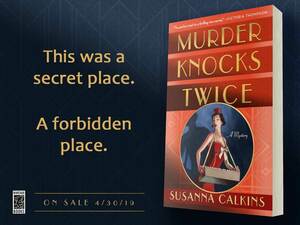
This is what I felt with MURDER KNOCKS TWICE, and how moving it has been for me to see this book out in the world. The journey of MURDER KNOCKS TWICE began about nine years ago. I was still querying--unsuccessfully--what would become the first novel in my new series--A MURDER AT ROSAMUND'S GATE. I kept getting rejected by agents, and I thought, 'Maybe I need to set aside this seventeenth-century novel, and try my hand at something different." (For the more complete journey of the first series, check out my post in HOW IT HAPPENED on the Thrill Begins). Even though I'm a British historian by training, for many years I've been teaching a graduate course on the History and Philosophy of Higher Education. On several occasions, I had found my way to the amazing archives at my university, and I began to think about setting my book on a college campus (much like mine) in 1930 Chicago. I was interested in college rituals and the role of the first women in college. I wrote about 200 pages of this book, which featured a young Egyptian woman named Shani, and her sidekick gum-cracking roommate Gina Ricci. I thought, this is going to be my new thing. My new historic period, my new world. But then, an interesting thing happened. That seventeenth-century novel ended up selling, and I ended up writing four books in that series (and will have a fifth out next year). So I set aside my 1930s Chicago novel, and it went in the DRAWER. But then, a few years ago, when my publisher asked me about a new series, I came back to that drawer and made an interesting discovery. The sidekick roommate was really the star of the book, and I moved her out of college, and into a West side Chicago speakeasy. Most of those 200 pages were scrapped, but the idea of the story remained. I wrote the first part without a contract, and then it was picked up. So there's a lesson in there, for me at least, about persisting even when the outcome is not known. The persistence was helped by loving the world that I was creating for my characters. I mean, speakeasies....cocktails....murder...?
4 Comments
"How do you write about a world you haven't lived in?"  This is the question posed by my guest author, Christina Hoag, a journalist-turned-novelist as she discusses her latest thriller... From the official blurb: Los Angeles homeboy Mags is desperate to get out of gang life, but the only exit is through sacrificing everything – and everyone - he loves. He must make the difficult choice, and soon, or have it made for him. Based on extensive interviews with street gang members, this noir crime novel explores a poor immigrant family’s struggle to survive in a gritty world where gangs appear to offer youth a way out but instead ensnare them in a tangle of deceit and betrayal. Just think how boring literature would be if writers just wrote what they knew. You could basically throw out historical and science fiction, for starters, plus a whole lot else. Just how many authors, screenwriters and TV writers have been serial killers? But how do you write about a world you haven’t lived in? Write what you’re passionate about, what intrigues you, and prepare to do a lot of research. You’ll also need your novelist’s imagination, a healthy dollop of intuition to fill in the gaps, and plenty of confidence that you can pull it off. My novel “Skin of Tattoos” is about an immigrant family who leaves a war zone of guerrillas in Central America and ends up in a war zone of gangs in Central Los Angeles. Much to his family’s dismay, the protagonist Mags gets involved in a gang with some inevitable consequences, such as a prison stint. When he gets out, things really go sideways for both himself and his family. How did I delve into this foreign world? First, I should say that I was a journalist, and the idea was sparked by my interviews with former gang members in El Salvador for a magazine story. I lived in Latin America for nine years so I knew that culture pretty well and speak Spanish. Years later, when I moved to Los Angeles, I worked for The Associated Press and my urban affairs beat involved writing about inner-city neighborhoods. I remembered my idea for a novel about the trap of gang life, and was amassing knowledge. I interviewed people involved with gangs in various aspects, plus people who were directly affected by gang activity. One of those interviews led to a nonfiction book about community peacekeeping in gang neighborhoods. “Peace in the Hood: Working with Gang Members to End the Violence” involved even more interviews with experts and former gang members. As I drove around these neighborhoods as a reporter, I absorbed details like the proverbial sponge. To get more personal details about this culture, I read every memoir written by former gang members I could find. They were a fantastic firsthand source. I read books about gangs themselves, devoured news stories, watched movies and TV shows about gangs, which were great as visual and dialogue aids. I found online dictionaries of gang slang. I stopped and started the novel many times, repeatedly losing my confidence as I began to realize the depth of the venture I’d taken on. But in the end, I persisted, and I’m glad I did even though it took years to finish the project. I love that book and all the characters. Maybe I’ll even do a sequel.  Christina Hoag is a former journalist for the Miami Herald and Associated Press who’s been threatened by a murderer’s girlfriend, had her laptop searched by Colombian guerrillas and phone tapped in Venezuela, hidden under a car to evade Guatemalan soldiers, posed as a nun to get inside a Caracas jail, interviewed gang members, bank robbers, thieves and thugs in prisons, shantytowns and slums, not to forget billionaires and presidents, some of whom fall into the previous categories. Kirkus Reviews praised Christina as a “talented writer” with a “well crafted debut” in Skin of Tattoos (Martin Brown Publishing, 2016), a noir crime novel. Her thriller Girl on the Brink (Fire and Ice YA, 2016) was named to Suspense Magazine’s Best of 2016 YA list. She also writes nonfiction, co-authoring Peace in the Hood: Working with Gang Members to End the Violence (Turner Publishing, 2014), a groundbreaking book on violence intervention used in several universities. Christina makes her home in Los Angeles and lives on the web at www.christinahoag.com.
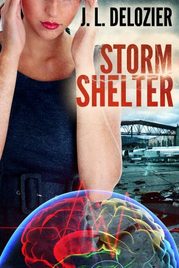 I'm delighted to host J.L. Delozier, author of thrillers TYPE AND CROSS and STORM SHELTER on my blog today. From the blurb: Dr. Persephone (Seph) Smith is a psychologist with enhanced empathy, allowing her to feel the emotions of others. But her gift comes with a price. Plagued by nightmares and insecure in her work, Seph absorbs the suffering of her patients by day and swills tequila by night. When Seph is deployed to an abandoned air hangar turned medical shelter during a massive hurricane, one by one, as the wind howls overhead, staff and evacuees disappear into the dark recesses of the vast space. The missing return as mutilated corpses. The living, trapped in the shrieking metal structure by the storm, descend into varying levels of paranoia and madness. Seph, as both counselor and detective, must determine who, or what, is preying on them. Is the panic and mayhem “shelter shock,” as the lead physician, Anne Parrish, insists? Or is everyone, Seph included, in danger of losing their minds—and their lives? Storm Shelter is a prequel to TYPE AND CROSS (WiDo Publishing, 2016) which features an older, wiser Dr. Persephone Smith. TYPE AND CROSS was recently nominated for International Thriller Writer’s “Best First Novel” of 2016. "Write what you know.” That tired, yet ubiquitous advice haunts first-time novelists and stifles the creativity of even advanced writers. Without dreamers—think Jules Verne and Arthur C. Clark—certain genres such as scifi, which relies on imaginative world-building, would be boring indeed. That said, when I committed to writing my first thriller, Type & Cross, I succumbed to the comfort of what I knew—science, medicine, and psychology. No research required, right? Wrong. As I wrote, I soon realized I’d entered Michael Crichton territory: a story built on a foundation of scientific fact, but with details so twisted and warped, I’d entered the fringes of possibility. I’d created my very own Jurassic Park, and I needed to do some research. For me, research meant digging out my old, dusty medical textbooks and boning up on hematology and virology—the study of blood and viruses, respectively. I had the added pressure of knowing my medical colleagues would be lying in wait, scalpels in hands, ready to shred my science to bits. I had to make the details genuine, but also salient and accessible to the average reader (i.e. not boring!) The science needed to drive the story, not drown it. Dr. Crichton was a master of this delicate balancing act. I was a newbie. Did I accomplish the task? You be the judge. I’ve had reviewers comment both ways. When I started book two, Storm Shelter, I swore I would make it easier on myself. No international hijinks (thank you, Google Maps.) No bizarre medical conditions. This time, I would write what I know. The end result: Storm Shelter takes place almost entirely within a single air hangar-turned-hurricane shelter in San Antonio and is based upon my real-life experiences as a disaster physician for the federal government. I’ve been in three such scenarios, and I merged the people, locations, and situations into one authentic and terrifying wild ride—no research required. Much of what you read in Storm Shelter actually happened in one form or the other (up until the grisly murders, that is!) It’s as close to a biography of those years as I’ll ever write, with details obscured to protect the innocent. Storm Shelter is available now on Kindle and releases in print on June 28th. But now I’m onto book three, the sequel to Type & Cross. And guess what? I’m in the Basque community of Spain (research) running through the medieval streets of Bilbao (research) while chasing a mad scientist who’s attempting to genetically modify people’s blood types in order to create a master race (research, research, research!) I am not writing what I know. I’d like to think Michael Crichton would approve.  J. L. Delozier spent the early part of her career as a rural family doctor and then later as a government physician, caring for America’s veterans and deploying to disasters such as Hurricanes Katrina, Ike and Gustav. Throughout it all, she quietly absorbed the sometimes fascinating, often heartbreaking and always dramatic life stories of her patients. She currently lives in Pennsylvania with her husband and four rescue cats. Learn more at her website jldelozier.com.
 After a too-long hiatus from my blog, I am delighted to be joined today by Sherry Knowlton, author of DEAD OF SPRING (2017). I asked Sherry to talk about how she researches her novels, and below she shares some terrific insights into how she balances authenticity and readability. (Basically, how to keep your reader entertained while being accurate at the same time!) In popular culture, authors are often portrayed as brooding figures who seethe with creativity. After long, pensive walks along a cliff (or dock, or meadow), the authors return to their garrets and type pages and pages of inspired prose.
For me, it doesn’t work quite that way. You’re more likely to find me writing in my sunroom in winter or in the gazebo on a nice summer’s day. And, I like to take walks, but I work out most of my plots in the car while I’m driving to yoga. Yes, there’s certainly a large element of creativity and inspiration involved in writing my Alexa Williams suspense series. But, much of my process involves a more mundane – although often fascinating-- task: research, research, research. Some genres of fiction might not require much, if any, in-depth research. (Certain fantasy novels spring to mind.) But, I write contemporary suspense, and each of my novels also include a historical story that parallels and intersects with the main plot. So, I want the background details in both stories to be as accurate as possible to enhance the novel’s “believability” and credibility. Plus, I don’t want my readers to drift away from the suspense, distracted by a historical anomaly or incorrect fact. (Wait a minute. Would that Depression-era character really have said, “Awesome, dude”?) I rely on some of my own experiences and knowledge of a topic or place as I write. But, often, I need to do further research to refresh my memories or obtain more specific information. My research follows two broad paths: learning from written, video and audio sources; and, interviewing experts. My new book, Dead of Spring, deals with fracking and politics. The historical story takes place during the Three Mile Island nuclear crisis in 1979. The setting for the contemporary story is Southcentral Pennsylvania, but my protagonist, Alexa, also travels to Tuscany and Umbria. I live in Southcentral PA. I worked in Pennsylvania state government. I’ve been following the politics of fracking for years. I lived through the Three Mile Island crisis. And, I’ve spent time in Italy. Still, that experience was not enough. I needed to review a lot of source material to fully capture these topics in my book. These sources ranged from technical articles and regulations on fracking to news clips and newspaper articles from the Three Mile Island event to Italian justice procedures. I might be able to get away with just delving into books and relying on the Google for my information. But, experts always add so much depth to my understanding of a topic. The acknowledgement sections in my novel are quite long because talking to experts has become a key pillar of my research process. And, I’ve been lucky to find subject matter experts on a wide variety of topics who have been very gracious with their time and expertise. For Dead of Spring, I relied on a State Police trooper and several other law enforcement officers, a judge, a historian responsible for the preservation of the Pennsylvania State Capitol, staff from Pennsylvania’s Lt. Governor’s office, a regulator in the state’s Department of Environmental Programs, gun experts, and more. One of the most helpful experts I interviewed was a landowner in northern Pennsylvania who leased his land to a hydraulic fracturing company in the early days of the state’s fracking boom. He took me on a tour of both his lands and other fracking sites at different stages of development. He also walked me through his personal experience by showing me his photographs of the transformation of his property. A beautiful woodland that step by step by step turned into an acre of gravel and machinery. Pristine drinking water that now requires constant filtering just for showers and bathing. Battles with the energy company about compensation for various problems. His fracking tutorial was eye-opening. Of course, research is only one aspect of the writing process... 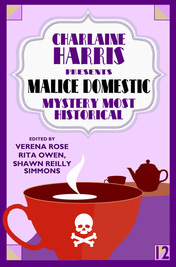 I'm so thrilled that my very first short story--The Trial of Madame Pelletier-- was selected for inclusion in Malice Domestic 12: Mystery Most Historical (Wildside Press, 2017). Like my Lucy Campion novels set in 17th century England, this short story stemmed from research I did in graduate school a zillion years ago. (And yeah, that's pretty fun for me to get to use another chunk of this doctoral research in a new way!) I won't say too much about my story other than it features the trial of a presumed poisoner in a small town in France, in 1840. The trial was a cause celebre--a trial of the century--which played out as much in the court of public opinion and in sensationalized newspaper accounts, as it did in the assize court in Limousin. I remember being struck too, not just be the trial itself, but how the woman at the heart of it--the Lady Poisoner--was being tried both as a criminal and as a female. While my story differs dramatically from the trial that inspired it, I did want to convey that same sense of a woman being tried on many levels. Moreover, ever since I read Agatha Christie's Witness for the Prosecution, I have wanted to try my hand at a courtroom drama. So this was such a fun piece for me to write overall. I'm really excited to read the other stories in the volume!!! The selected stories are:
"A One-Pipe Problem" by John Betancourt "The Trial of Madame Pelletier" by Susanna Calkins "Eating Crow" by Carla Coupe "The Lady's Maid Vanishes" by Susan Daly "Judge Lu's Ming Dynasty Case Files-The Unseen Opponent" by P.A. De Voe "Honest John Finds a Way" by Michael Dell "Spirited Death" by Carole Nelson Douglas "The Corpse Candle" by Martin Edwards "Mistress Threadneedle's Quest" by Kathy Lynn Emerson "The Black Hand" by Peter Hayes "Crim Con" by Nancy Herriman "Hand of an Angry God" by KB Inglee "The Barter" by Su Kopil "Tredegar Murders" by Vivian Lawry "The Tragic Death of Mrs. Edna Fogg" by Edith Maxwell "A Butler is Born" by Catriona McPherson "Home Front Homicide" by Liz Milliron "He Done Her Wrong" by Kathryn O'Sullivan "Summons for a Dead Girl" by K.B. Owen "Mr. Nakamura's Garden" by Valerie O Patterson "The Velvet Slippers" by Keenan Powell "The Blackness Before Me" by Mindy Quigley "Death on the Dueling Grounds" by Verena Rose "You Always Hurt the One You Love" by Shawn Reilly Simmons "Night and Fog" by Marcia Talley "The Measured Chest" by Mark Thielman "The Killing Game" by Victoria Thompson "The Cottage" by Charles Todd "The Seven" by Elaine Viets "Strong Enough" by Georgia Wilson Someone asked me recently what goes into promoting a book. I'm sure really savvy best-selling authors do really smart important stuff, but this is a run-down of what I've been doing since my fourth historical mystery, A DEATH ALONG THE RIVER FLEET (Minotaur, 2016), came out in mid-April. (I should add that this is all on top of a full-time job, teaching, and 2 kids, so there's that...). But, basically I've been... Writing a whole bunch of blog posts... 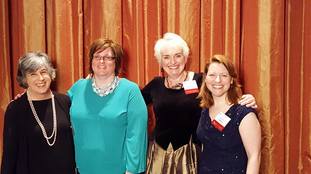 2016 Mary Higgins Clark Nominees: Hailie Ephron, Lori Rader-Day (winner!), Catriona McPherson and Yours Truly 2016 Mary Higgins Clark Nominees: Hailie Ephron, Lori Rader-Day (winner!), Catriona McPherson and Yours Truly ....like what being nominated for the Mary Higgins Clark means to me (Femme Fatales) & What Would Mary Write? (Jungle Red Writers). Partying at the Edgars Banquet....
(Some people would probably refer to this as 'networking,' but I call it making friends and having fun...) Paneling at Malice Domestic... 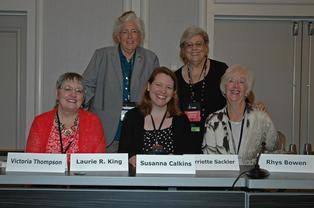 Agatha Nominees for Best Historical 2016 (Laure R. King won!) And writing MORE pieces in which I...
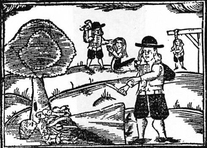 ...discuss how murder ballads inspired my novels... ("A True Account of a Most Monstrous Act, and Other Strange Happenings…" over at Criminal Element)
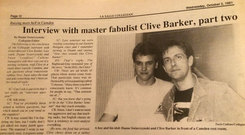 ... and co-interview my college pal Duane Swierczynski (Edgar-nominated author of CANARY) about our time writing for the La Salle Collegian and stalking, er, talking to Clive Barker... [In a pretty rare event for me, I even reviewed Duane's book at Criminal Element!]
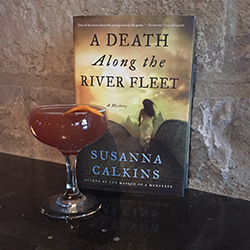 ...And Scottish Whiskey... Check out this cocktail "A Death Along the River Peat" Love it! Recipe included!!! (Thanks Criminal Element!) Completing a few interviews, in which I share:
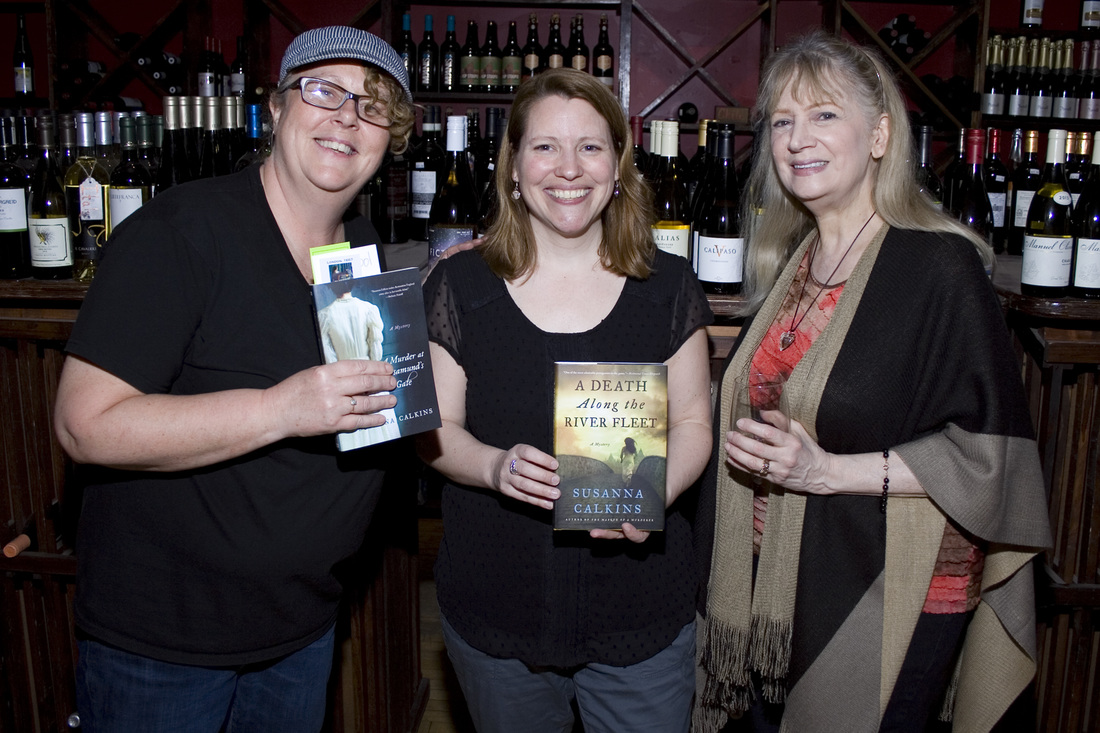
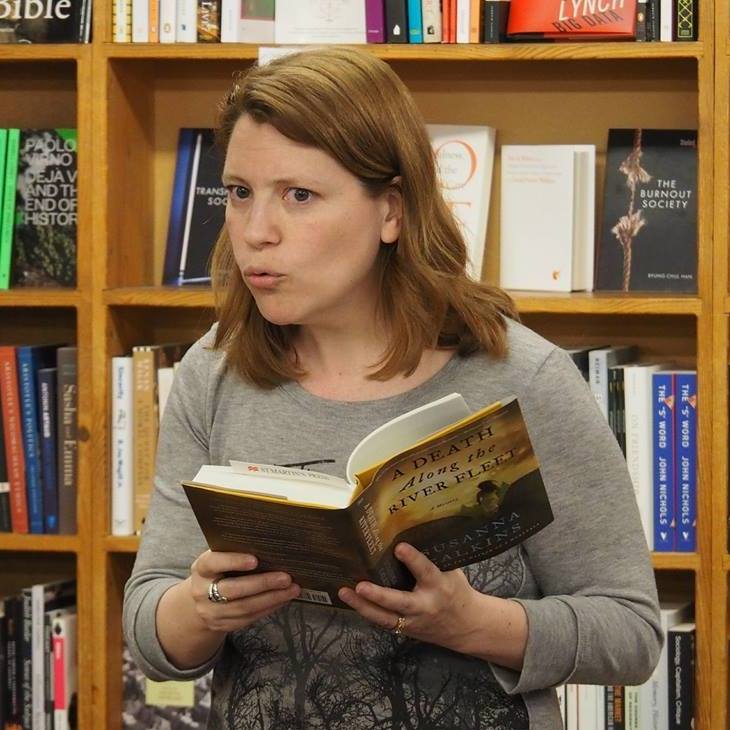
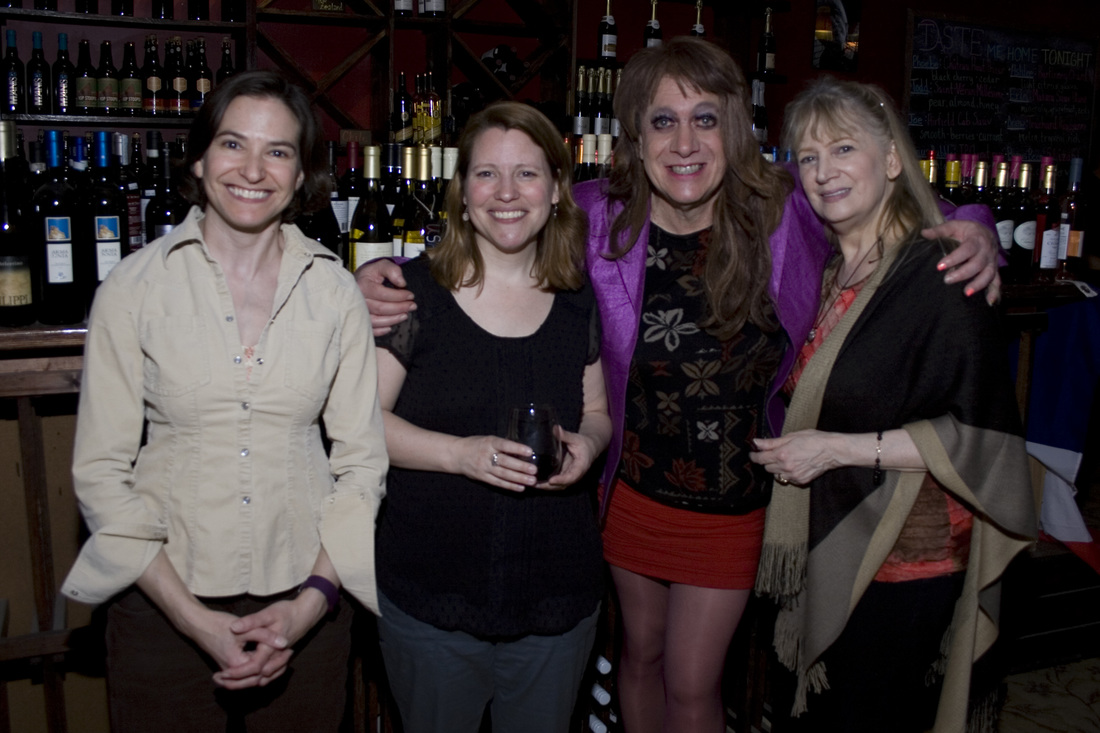
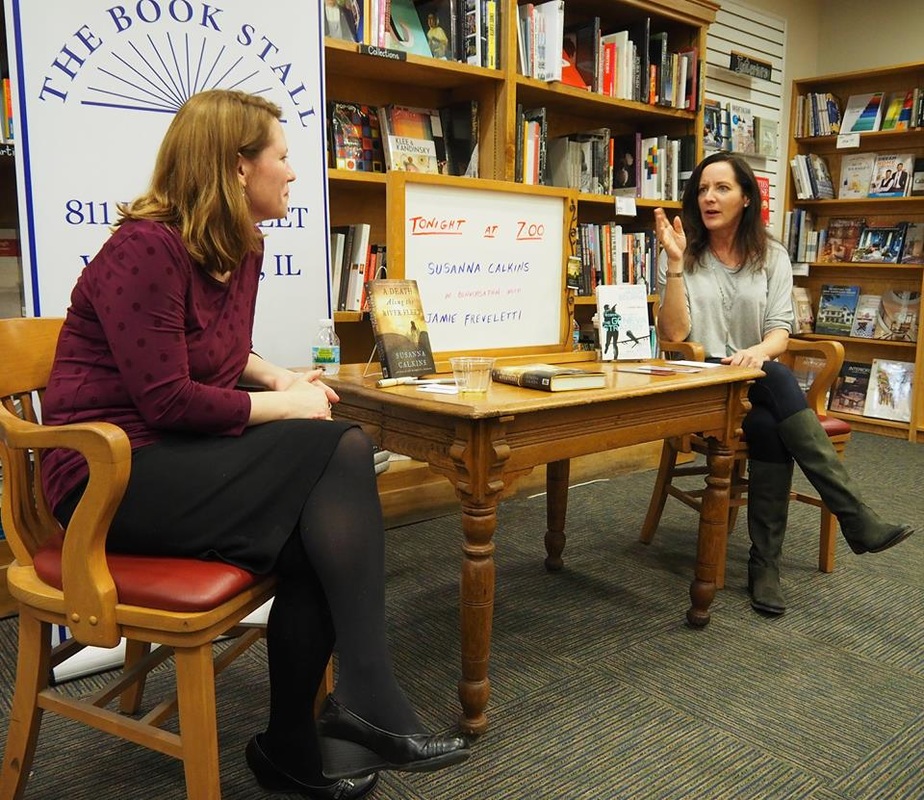
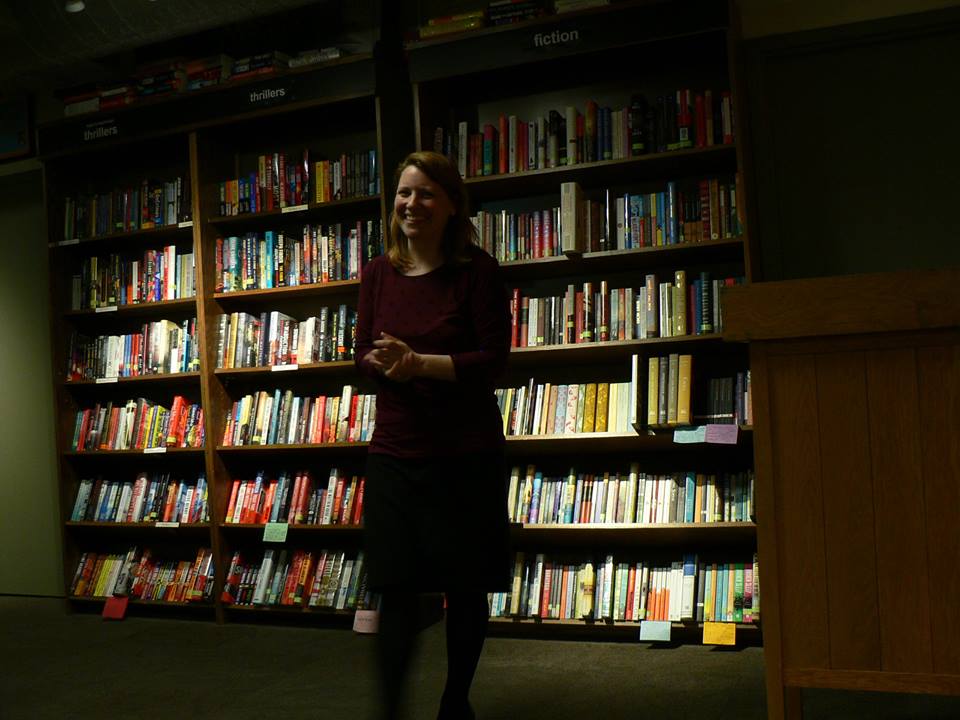
And of course, speaking at a bunch of fun book talks at local book stores and other venues: [Of course, posting these pictures makes me realize that I wear the same outfits to all my book signings!) So clearly, another day I should write about how to balance all this craziness, but putting this post together was probably the most exhausting thing I've done!
And now, back to writing novels!!! 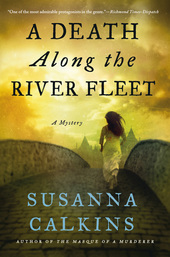 I'm often asked about how I write my books, whether I outline them first or just start writing. But really my books come to me in a series of images and then questions, which I then seek to answer.
For A DEATH ALONG THE RIVER FLEET, the image that came to me is essentially what has been portrayed on the cover. The image was of a disheveled woman, barefoot and clad only in a simple shift, covered in blood that was not her own. In my mind, she had no memory of who she was, or what had happened to her. But that's where the questions started.... First, I needed to think about where Lucy could encounter her that was plausible. I thought maybe on the London Bridge, but the Bridge had been damaged by the Great Fire, and I didn't think Lucy could be walking in that direction. So I thought about other options, and ended up having Lucy encounter the woman on Holborn Bridge, by the rancid River Fleet when out delivering books. Then, I began to think about what Lucy would do when she found the woman--how would she react? Lucy, being Lucy, decides that she can't just leave this poor afflicted woman to the devices of suspicious townspeople, and takes her to a physician she knows. And then that led to more questions. What would a more educated person think about the woman's illness? What kind of healed wounds might the woman have, under closer inspection? How could they learn the woman's identity--what kind of clues could be on her person? And of course lastly--whose blood was on the woman? Those are the types of questions that I would ask myself, to keep my story moving forward.... If you are interested in reading an excerpt, you can see how these questions involved into the story at the heart of A DEATH ALONG THE RIVER FLEET. 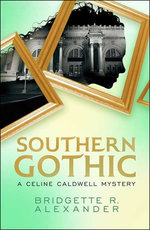 I am delighted to be joined on my blog today by Bridgette R Alexander, author of SOUTHERN GOTHIC: A Celine Caldwell Mystery (to be released March 15, 2016). I had the pleasure of reading Bridgette's debut novel a few weeks ago, and I was struck by the authenticity of her main character's voice. I thought that her amateur sleuth, Celine Caldwell, came across as a "real" teenager--which is actually not an easy feat. So I asked Bridgette to talk about her experience with writing YA fiction. SC: Bridgette, why did you decide to write YA? BA: I grew up loving ABC’s after school specials. What I liked about them was that each story was told from the perspective of a teenage girl, usually, and it gave me a sense that I wasn’t alone in my day-to-day struggles as an adolescent. By that I mean, adolescence is a tough place to be in and you’re there for a long period of time. You are caught between two worlds, one world of a child – its only two or three years ago you were taken to the junior’s section of a department store and your mother was selecting clothes for you. Your world was pretty much being established by the adults around you. Then, there is this other world of [looming] adulthood. Total and complete agency – by you; at 14 or 16 you can make some decisions for yourself, at least what you’re going to wear and who your friends are; and the biggest of all – eros – your attraction and your identity. For me, those moments were paramount. So much so, that I like to view being an adult as an old-kid with benefits. SC: Are there any authors who particularly inspired you? BA: I was introduced to some of my all-time favorite authors when I was in the 7th grade: Mark Twain; John Steinbeck; James Baldwin; William Faulkner; Tennessee Williams; and Hermann Melville. I loved how those works transformed me into the worlds the authors created and caused me to think about the world I inhabited. Then on my own I found the works of other authors and also fell in love with them: Jackie Collins; Harold Robbins; Judith Krantz; I know, I know…they are not exactly children’s authors, but I so loved their works. Mystery and thriller writers I just adore – Agatha Christie, Steven King Joyce Carol Oates and Sarah Paretsky; and of YA writers I really love the work of Sarah Dessen, I love her stories. She totally captures the voice of a strong, independent teenage girl. There are sooo many writers I love, these are just a few of them. SC: What do you enjoy most about writing YA? BA: I like seeing the world fresh again. SC: What kinds of challenges have you faced in writing YA? BA: In writing…not so much. At the moment when I could visualize Celine Caldwell and her life, then her all of her friends and their lives, it was like a motion picture – fluid, moving, colorful and rich with characters. For me it’s been more of a head-game I've had to overcome. The notion of the solitary artist…alone in his or her misery as the only path to creativity is a romantic construct. One that at the on-start of developing and trying to write the Celine Caldwell Mysteries, I thought I was bound to adapt. It was difficult. As a scholar my life was writing among other scholars; sharing my works and dissecting that work with other scholars. As a scholar and thinker I led a fully engaged life. Only in the archives and the library stacks would I actually be in solitude. When I adapted to my writing the engaged-life I was used to, it felt real and true. I am creating characters, developing scenes, structuring the chapters, going back and forth with my editors. SC: How do you make sure your characters are “authentic”? In terms of voice, dialogue, mannerisms? BA: At the beginning of writing Celine Caldwell Mystery series, I organized a teen council made up of girls between the ages of 12 and 18. We’d meet and I’d give them a Celine-Scenario and ask them what would they do or if Celine’s actions were authentic for a teenager, and not just as a teen being driven by an adult. It was important for me to remove myself as much as possible from the equation of Celine Caldwell, 16 year old art world sleuth. Now that’s more of the technical work I’ve done, compared to the easy going fun time I make time for in talking and listening to teen voices. I continue to spend a good deal of time with teenagers because I strongly believe from where I stand it easy for me to “slip” back into the voice and mannerism of an adult person. SC: I know you have a daughter...did you learn anything from her that helped you write your book, or offer insight into the teenager experience? BA: My daughter is the inspiration behind Celine Caldwell. I created [Celine] when my daughter was a newborn. I’d often imagine her future -- how would she relate to the world; what would she look like once she becomes a teenager. My daughter’s life is very different from my upbringing. Her life looks more like the character Celine Caldwell’s with the big exception, my daughter has a doting mother and father. SC: What advice if any would you offer someone interested in writing YA? People or writers hear this a lot…but it stands to be repeated. Write what you know and do it from your soul. 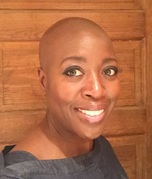 Bridgette R. Alexander is a modern art historian. She received her graduate training in 19th century French art history at the University of Chicago. Alexander worked with some of the world’s greatest museums in New York, Paris, Berlin and Chicago and developed art education programs; curated exhibits; she has taught and published in art history. She’s been featured in a number of publications including, Art + Auction Magazine; the Wall Street Journal; and the Washington Post.
SOUTHERN GOTHIC is her debut novel. Alexander currently lives in Chicago and when not writing, she takes her husband, daughter and friends on midnight tours of the cultural institutions. Visit her website (http://celinecaldwell.com). There is a long tradition of authors using pseudonyms or writing under Anonymous, and I'm always curious about what makes someone wish to write under someone else's name. I asked Sharon Pisacreta to join me on my blog today, to discuss why she uses pseudonyms (FOUR!) and how she chose them. Her first book in a new series, DYING FOR STRAWBERRIES, will be released November 1, 2016. 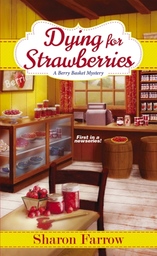 Along with spies and people in the witness protection program, authors often feel compelled to change identities. My upcoming mystery series will be released under ‘Sharon Farrow’. It will be the fourth name I’ve used as an author. When my stories and articles first began to appear in magazines, I proudly used the name I was born with. Although it was a tricky Italian name that few non-Italians could pronounce, it made my family happy. However I learned that Shakespeare’s question “What’s in a name?” has special meaning for authors. After I sold my first novel, I thought I’d make things easier for my readers and decided on ‘Sharon Kirk’ as a pseudonym (yes, I’m a Trekkie). Unfortunately, someone in production forgot to read my contract and released that first book under my Italian name. Two other books followed, accompanied by numerous calls from my publisher asking how to pronounce ‘Pisacreta’. Sales reps ran into problems with my name when speaking with distributors. One of my novels was sold as part of a six-book package on the Home Shopping Network, eliciting more questions on exactly how the TV host should say my name. My editor finally asked if I would mind taking a pseudonym. I was happy to oblige. This time I went with ‘Cynthia Kirk’. It sounded British, elegant, and impossible to mispronounce. Soon after, I put aside novel writing and returned to magazine work under my maiden name. I got back in the novel writing game when a friend and fellow author convinced me to team up with her on a mystery series. Because our previous novels were in the romance and western genres, we needed a pen name for our historical mystery series. Marketing is everything in publishing, and an author’s name is a form of branding. If readers want to buy your mystery novel, they don’t want to be confused if you also write science fiction under the same name. We wanted an easy name to spell and remember. The result was D.E. Ireland. Since our series is based on Shaw’s Pygmalion and stars Eliza Doolittle, we chose her initials, transposing them for our first name. Ireland was selected because George Bernard Shaw was born and raised in Dublin. As a writing team, a pen name seemed necessary. Few teams publish under one of the pair’s real name. A notable exception is the Ian Rutledge mystery series by Charles Todd, written by Charles and his mother Caroline. Normally, a new pseudonym is created for the duo, such as Alice Alfonsi and husband Marc Cerasino who write as ‘Cleo Coyle’. All writers should keep a few pen names in their back pocket. If you’re prolific, publishers don’t want to flood the market with too any books under one name in the same year. Because Dean Koontz sometimes published eight books a year, he wrote under eleven different names. Famous authors may feel constrained by their success and want to try something new under a pseudonym. J.K. Rowling writes mystery novels as Robert Galbraith, Stephen King’s alter ego is Richard Bachman. When Anne Rice switched from vampires to erotica, she did so under two pen names. And prolific romance author Nora Roberts chose to write as J.D. Robb for her futuristic mysteries. Because mysteries are so popular, many authors meet demand by writing more than one series under different names. Vicki Delaney writes cozies and suspense novels under both the pseudonym Eva Gates and her own name. Eva K. Sandstrom uses the pseudonym JoAnna Carl for her long running Chocoholic series. Some authors simply prefer using a pseudonym. Janet Quin-Harkin became Rhys Bowen. Juliet Marion Hulme writes as Anne Perry. As we did with D.E. Ireland, choosing a gender neutral pen name also helps attract male readers not prone to buying novels by women. Famous examples include Marion McChesney Gibbons writing as M.C. Beaton, and Edith Mary Pargeter as Ellis Peters. A publisher might also insist on a pseudonym if books written under a previous name had lackluster sales. They often feel it is best to start fresh with a new writing identity. Whether it’s due to a difficult name to pronounce, being too prolific, a poor sales record, switching genres, a writing collaboration, or a desire to conceal your gender, taking on a pseudonym is always an adventure. Finally, writing under a pen name provides a measure of anonymity – and a bit of welcome distance. A bad review directed at books written under your real name cuts a little sharper than one aimed at one written under a pseudonym. It may sound odd, but it’s true. That alone may be worth a name change. 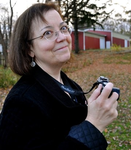 Sharon Farrow writes The Berry Basket Mysteries set in Oriole Point, Michigan. The first book in the series, DYING FOR STRAWBERRIES, will be released on November 1, 2016. While this is her debut as ‘Sharon Farrow’, she wrote romance novels under both ‘Sharon Pisacreta’ and ‘Cynthia Kirk’. In 2013, she took on another pseudonym as one half of the writing duo, ‘D.E. Ireland’, the Agatha Award nominated authors of the Eliza Doolittle/Henry Higgins mystery series.
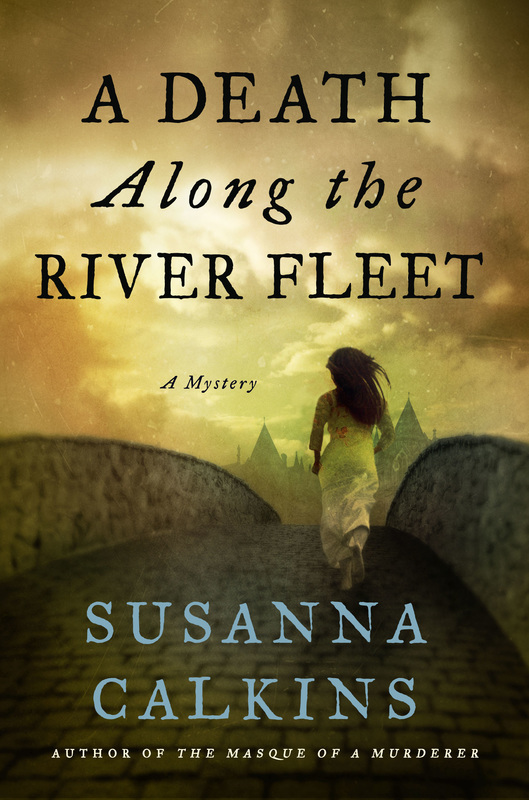 I think it looks beautiful! Great movement--a fresh direction. Who is that woman anyway..? Why is she running...?
All secrets will be revealed April 2016...!!! |
Susanna CalkinsHistorian. Mystery writer. Researcher. Teacher. Occasional blogger. Categories
All
Archives
May 2023
|


 RSS Feed