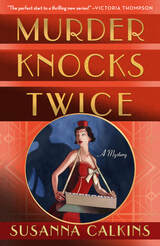
 The launch of MURDER KNOCKS TWICE has been such a whirlwind! But I do enjoy meeting readers at my book events, and telling new stories about my research and writing.
I've also had the chance to write a few blog posts on different aspects of my research and writing. Here are a few:
1 Comment
 Chicago Daily Tribune (1923-1963); Dec 5, 1929; ProQuest Historical Newspapers: Chicago Tribune pg. 16 Chicago Daily Tribune (1923-1963); Dec 5, 1929; ProQuest Historical Newspapers: Chicago Tribune pg. 16 Every writer I know is regularly asked, "Where do you get your ideas?" Some authors love this question, some hate it. For me, I'm somewhere in between. With my very first novel, A MURDER AT ROSAMUND'S GATE, I was essentially answering a set of questions that had come to me while I was studying murder ballads as a graduate student (as one does!) So, back then, it was super easy and fun to answer. With my new series, the ideas came to me differently, so my response is no longer so pat. But I am regularly inspired by 1920s newspapers.  Chicago Daily Tribune (1923-1963); Sep 16, 1928; ProQuest Historical Newspapers: Chicago Tribune pg. 3 Chicago Daily Tribune (1923-1963); Sep 16, 1928; ProQuest Historical Newspapers: Chicago Tribune pg. 3 Obviously the newspaper is a great way to learn about what's going on in the neighborhood where I set my Chicago speakeasy, providing a useful level of detail. But more importantly, this kind of event can also be so inspiring--WHY would someone bomb an ice cream parlor? (Stay tuned--I answer that question in the second Speakeasy Murders) 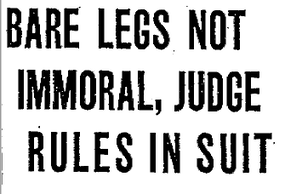 Chicago Daily Tribune (1923-1963); Oct 16, 1929; ProQuest Historical Newspapers: Chicago Tribune pg. 5 Chicago Daily Tribune (1923-1963); Oct 16, 1929; ProQuest Historical Newspapers: Chicago Tribune pg. 5 And of course, the headlines reveal other interesting things about Chicago culture. This kind of headline, "Bare legs not immoral," is exactly the kind of thing I will stop to read. It gives a lot of nuance to our understanding of the "New Woman," and this is the kind of detail that will find its way into my story. What inspires YOUR stories? Even if you don't view yourself as a writer, what inspires the stories you tell to others?
"How do you write about a world you haven't lived in?" 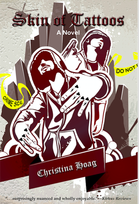 This is the question posed by my guest author, Christina Hoag, a journalist-turned-novelist as she discusses her latest thriller... From the official blurb: Los Angeles homeboy Mags is desperate to get out of gang life, but the only exit is through sacrificing everything – and everyone - he loves. He must make the difficult choice, and soon, or have it made for him. Based on extensive interviews with street gang members, this noir crime novel explores a poor immigrant family’s struggle to survive in a gritty world where gangs appear to offer youth a way out but instead ensnare them in a tangle of deceit and betrayal. Just think how boring literature would be if writers just wrote what they knew. You could basically throw out historical and science fiction, for starters, plus a whole lot else. Just how many authors, screenwriters and TV writers have been serial killers? But how do you write about a world you haven’t lived in? Write what you’re passionate about, what intrigues you, and prepare to do a lot of research. You’ll also need your novelist’s imagination, a healthy dollop of intuition to fill in the gaps, and plenty of confidence that you can pull it off. My novel “Skin of Tattoos” is about an immigrant family who leaves a war zone of guerrillas in Central America and ends up in a war zone of gangs in Central Los Angeles. Much to his family’s dismay, the protagonist Mags gets involved in a gang with some inevitable consequences, such as a prison stint. When he gets out, things really go sideways for both himself and his family. How did I delve into this foreign world? First, I should say that I was a journalist, and the idea was sparked by my interviews with former gang members in El Salvador for a magazine story. I lived in Latin America for nine years so I knew that culture pretty well and speak Spanish. Years later, when I moved to Los Angeles, I worked for The Associated Press and my urban affairs beat involved writing about inner-city neighborhoods. I remembered my idea for a novel about the trap of gang life, and was amassing knowledge. I interviewed people involved with gangs in various aspects, plus people who were directly affected by gang activity. One of those interviews led to a nonfiction book about community peacekeeping in gang neighborhoods. “Peace in the Hood: Working with Gang Members to End the Violence” involved even more interviews with experts and former gang members. As I drove around these neighborhoods as a reporter, I absorbed details like the proverbial sponge. To get more personal details about this culture, I read every memoir written by former gang members I could find. They were a fantastic firsthand source. I read books about gangs themselves, devoured news stories, watched movies and TV shows about gangs, which were great as visual and dialogue aids. I found online dictionaries of gang slang. I stopped and started the novel many times, repeatedly losing my confidence as I began to realize the depth of the venture I’d taken on. But in the end, I persisted, and I’m glad I did even though it took years to finish the project. I love that book and all the characters. Maybe I’ll even do a sequel.  Christina Hoag is a former journalist for the Miami Herald and Associated Press who’s been threatened by a murderer’s girlfriend, had her laptop searched by Colombian guerrillas and phone tapped in Venezuela, hidden under a car to evade Guatemalan soldiers, posed as a nun to get inside a Caracas jail, interviewed gang members, bank robbers, thieves and thugs in prisons, shantytowns and slums, not to forget billionaires and presidents, some of whom fall into the previous categories. Kirkus Reviews praised Christina as a “talented writer” with a “well crafted debut” in Skin of Tattoos (Martin Brown Publishing, 2016), a noir crime novel. Her thriller Girl on the Brink (Fire and Ice YA, 2016) was named to Suspense Magazine’s Best of 2016 YA list. She also writes nonfiction, co-authoring Peace in the Hood: Working with Gang Members to End the Violence (Turner Publishing, 2014), a groundbreaking book on violence intervention used in several universities. Christina makes her home in Los Angeles and lives on the web at www.christinahoag.com.
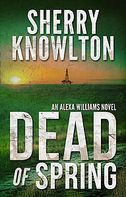 After a too-long hiatus from my blog, I am delighted to be joined today by Sherry Knowlton, author of DEAD OF SPRING (2017). I asked Sherry to talk about how she researches her novels, and below she shares some terrific insights into how she balances authenticity and readability. (Basically, how to keep your reader entertained while being accurate at the same time!) In popular culture, authors are often portrayed as brooding figures who seethe with creativity. After long, pensive walks along a cliff (or dock, or meadow), the authors return to their garrets and type pages and pages of inspired prose.
For me, it doesn’t work quite that way. You’re more likely to find me writing in my sunroom in winter or in the gazebo on a nice summer’s day. And, I like to take walks, but I work out most of my plots in the car while I’m driving to yoga. Yes, there’s certainly a large element of creativity and inspiration involved in writing my Alexa Williams suspense series. But, much of my process involves a more mundane – although often fascinating-- task: research, research, research. Some genres of fiction might not require much, if any, in-depth research. (Certain fantasy novels spring to mind.) But, I write contemporary suspense, and each of my novels also include a historical story that parallels and intersects with the main plot. So, I want the background details in both stories to be as accurate as possible to enhance the novel’s “believability” and credibility. Plus, I don’t want my readers to drift away from the suspense, distracted by a historical anomaly or incorrect fact. (Wait a minute. Would that Depression-era character really have said, “Awesome, dude”?) I rely on some of my own experiences and knowledge of a topic or place as I write. But, often, I need to do further research to refresh my memories or obtain more specific information. My research follows two broad paths: learning from written, video and audio sources; and, interviewing experts. My new book, Dead of Spring, deals with fracking and politics. The historical story takes place during the Three Mile Island nuclear crisis in 1979. The setting for the contemporary story is Southcentral Pennsylvania, but my protagonist, Alexa, also travels to Tuscany and Umbria. I live in Southcentral PA. I worked in Pennsylvania state government. I’ve been following the politics of fracking for years. I lived through the Three Mile Island crisis. And, I’ve spent time in Italy. Still, that experience was not enough. I needed to review a lot of source material to fully capture these topics in my book. These sources ranged from technical articles and regulations on fracking to news clips and newspaper articles from the Three Mile Island event to Italian justice procedures. I might be able to get away with just delving into books and relying on the Google for my information. But, experts always add so much depth to my understanding of a topic. The acknowledgement sections in my novel are quite long because talking to experts has become a key pillar of my research process. And, I’ve been lucky to find subject matter experts on a wide variety of topics who have been very gracious with their time and expertise. For Dead of Spring, I relied on a State Police trooper and several other law enforcement officers, a judge, a historian responsible for the preservation of the Pennsylvania State Capitol, staff from Pennsylvania’s Lt. Governor’s office, a regulator in the state’s Department of Environmental Programs, gun experts, and more. One of the most helpful experts I interviewed was a landowner in northern Pennsylvania who leased his land to a hydraulic fracturing company in the early days of the state’s fracking boom. He took me on a tour of both his lands and other fracking sites at different stages of development. He also walked me through his personal experience by showing me his photographs of the transformation of his property. A beautiful woodland that step by step by step turned into an acre of gravel and machinery. Pristine drinking water that now requires constant filtering just for showers and bathing. Battles with the energy company about compensation for various problems. His fracking tutorial was eye-opening. Of course, research is only one aspect of the writing process... 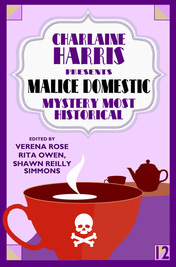 I'm so thrilled that my very first short story--The Trial of Madame Pelletier-- was selected for inclusion in Malice Domestic 12: Mystery Most Historical (Wildside Press, 2017). Like my Lucy Campion novels set in 17th century England, this short story stemmed from research I did in graduate school a zillion years ago. (And yeah, that's pretty fun for me to get to use another chunk of this doctoral research in a new way!) I won't say too much about my story other than it features the trial of a presumed poisoner in a small town in France, in 1840. The trial was a cause celebre--a trial of the century--which played out as much in the court of public opinion and in sensationalized newspaper accounts, as it did in the assize court in Limousin. I remember being struck too, not just be the trial itself, but how the woman at the heart of it--the Lady Poisoner--was being tried both as a criminal and as a female. While my story differs dramatically from the trial that inspired it, I did want to convey that same sense of a woman being tried on many levels. Moreover, ever since I read Agatha Christie's Witness for the Prosecution, I have wanted to try my hand at a courtroom drama. So this was such a fun piece for me to write overall. I'm really excited to read the other stories in the volume!!! The selected stories are:
"A One-Pipe Problem" by John Betancourt "The Trial of Madame Pelletier" by Susanna Calkins "Eating Crow" by Carla Coupe "The Lady's Maid Vanishes" by Susan Daly "Judge Lu's Ming Dynasty Case Files-The Unseen Opponent" by P.A. De Voe "Honest John Finds a Way" by Michael Dell "Spirited Death" by Carole Nelson Douglas "The Corpse Candle" by Martin Edwards "Mistress Threadneedle's Quest" by Kathy Lynn Emerson "The Black Hand" by Peter Hayes "Crim Con" by Nancy Herriman "Hand of an Angry God" by KB Inglee "The Barter" by Su Kopil "Tredegar Murders" by Vivian Lawry "The Tragic Death of Mrs. Edna Fogg" by Edith Maxwell "A Butler is Born" by Catriona McPherson "Home Front Homicide" by Liz Milliron "He Done Her Wrong" by Kathryn O'Sullivan "Summons for a Dead Girl" by K.B. Owen "Mr. Nakamura's Garden" by Valerie O Patterson "The Velvet Slippers" by Keenan Powell "The Blackness Before Me" by Mindy Quigley "Death on the Dueling Grounds" by Verena Rose "You Always Hurt the One You Love" by Shawn Reilly Simmons "Night and Fog" by Marcia Talley "The Measured Chest" by Mark Thielman "The Killing Game" by Victoria Thompson "The Cottage" by Charles Todd "The Seven" by Elaine Viets "Strong Enough" by Georgia Wilson 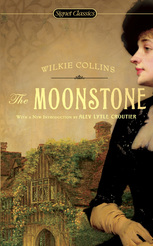 On my recent vacation, I finally got a chance to delve into a novel I've always wanted to read: THE MOONSTONE (1868) by Wilkie Collins, often considered the first modern detective novel. It also caused me to reflect a bit on my writing, and how important it is to consider the heart of each scene. The story is told through multiple narrators, including Gabriel Betteredge, the septegenarian steward of the household, charged with detailing the loss of the diamond--the mystery at the center of the novel. As a writer, I was immediately amused by the way that Betteredge set to writing his account. First, he consults his trusty ROBINSON CRUSOE, opening it at random as others might seek insights from a religious text: 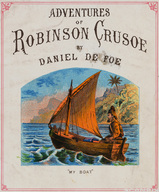 "In the first part of ROBINSON CRUSOE, at page one hundred and twenty-nine, you will find it thus written: 'Now I saw, though too late, the Folly of beginning a Work before we count the Cost, and before we judge rightly of our own Strength to go through with it.'" A prophecy? he wonders. How could he set to writing such a momentous task? Could he see it through? Questions surely every author has pondered when staring at that first blank page before the story has begun. He then proceeds to speak at length at how well ROBINSON CRUSOE can answer all life's great mysteries. After a time though, he finally realizes he has not yet started the story he was tasked to write: "Still, this don't look much like starting the story of the Diamond--does it? I seem to be wandering off in search of Lord knows what, Lord knows where. We will take a new sheet of paper, if you please, and begin over again, with my best respects to you." So he begins his story again, this time how he came to serve in his lady's household, where the diamond was destined, and about how he came to marry his wife and have a daughter. Again he goes on at length, until he gets to the end of the passage: "My daughter Penelope has just looked over my shoulder to see what I have done so far. She remarks that it is beautifully written, and every word of it true. But she points to one objection. She says what I have done so far isn't in the least what I was wanted to do. I am asked to tell the story of the Diamond and, instead of that, I have been telling the story of my own self." Already off track, he then ponders further that idea that many authors probably think about: "I wonder whether the gentlemen who make a business and a living out of writing books, ever find their own selves getting in the way of their subjects, like me? If they do, I can feel for them." Then he starts the story one more time, this time with a little more desperation: "In the meantime, here is another false start, and more waste of good writing paper. What's to be done now? Nothing that I know of, except for you to keep your temper, and for me to begin it all over again for the third time." This may be surprising, but I think THE MOONSTONE offers an important lesson in finding the heart of a scene. In some ways, what the narrator Betteredge is doing is the kind of throat-clearing we often see writers do, particularly those with less experience. (To be clear, I am focusing on the words and thoughts of the character, not the actual author Wilkie Collins, who I think is brilliantly setting up the characters and the narrative). One of the things I've observed when critiquing the work of others--and this is certainly something I've struggled with myself--is how often writers (especially less experienced ones) do not start and end scenes in a particularly effective manner.
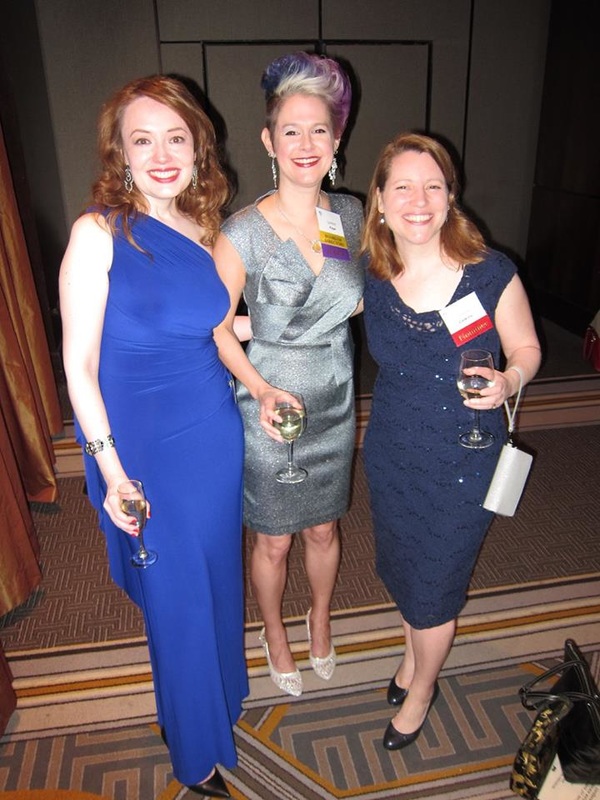
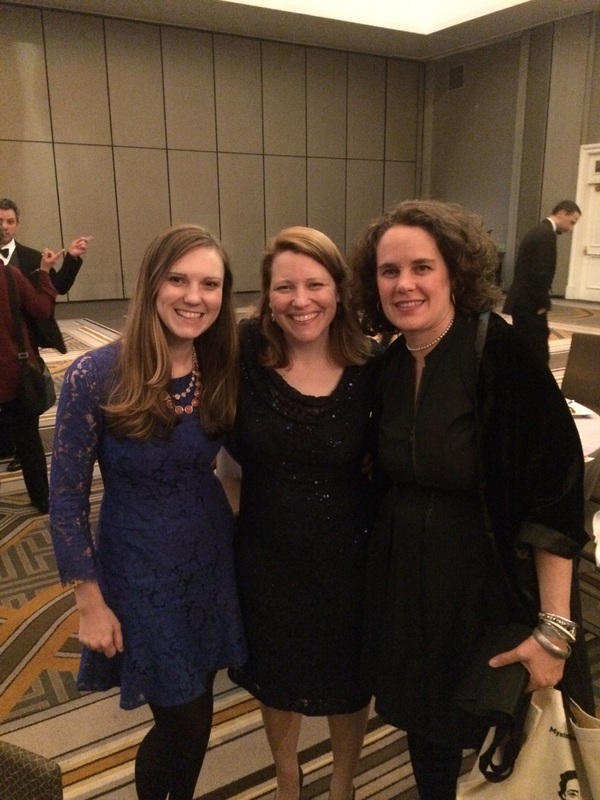
Many writers seem to just meander into a scene, as if they are strolling to an important event in town. Along the way to this event, they greet people, pop in and out of stores, talk on their cell phones, watch their dogs play, chase after kids, look at shapes in the clouds. Others meander away from an important event, without any plans on what they intend to do next. This may be fine in real life, but in writing, a scene should be more focused. I try to encourage writers to ask themselves questions: What is the goal of this scene? Does it advance a plot or subplot? Is it intended to reveal or continue a conflict? Is it meant to force a story forward? Is it intended to show a response to a conflict or dilemma? Does it indicate a decision or resolution (or even a seeming stalemate)? For me, even though I am a 'seat of the pants' kind of writer--a pantser--I find that asking these kinds of questions help me think through my intentions even as I go. This is not to say that scenes should follow some sort of template. One of the fascinating things about THE MOONSTONE is its unusual narrative structure (perhaps more common now, but certainly uncommon in its day). The scenes, though offered in a meandering way by the narrator, actually quite purposefully lay out the far-larger story of the diamond, dropping clues and intimations in a rather remarkable way. Getting to the heart of the story, by getting at the heart of each scene--is crucial. Otherwise, we'll be flailing about like Betteredge, "wandering off in search of Lord knows what, Lord knows where." And when your meandering tale can not be saved, pick up your quill, lay out a new sheet of paper and now, "refreshed in hope," re-start your story again. Someone asked me recently what goes into promoting a book. I'm sure really savvy best-selling authors do really smart important stuff, but this is a run-down of what I've been doing since my fourth historical mystery, A DEATH ALONG THE RIVER FLEET (Minotaur, 2016), came out in mid-April. (I should add that this is all on top of a full-time job, teaching, and 2 kids, so there's that...). But, basically I've been... Writing a whole bunch of blog posts... 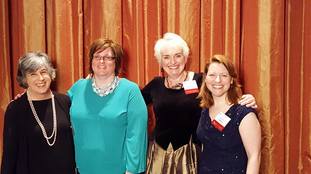 2016 Mary Higgins Clark Nominees: Hailie Ephron, Lori Rader-Day (winner!), Catriona McPherson and Yours Truly 2016 Mary Higgins Clark Nominees: Hailie Ephron, Lori Rader-Day (winner!), Catriona McPherson and Yours Truly ....like what being nominated for the Mary Higgins Clark means to me (Femme Fatales) & What Would Mary Write? (Jungle Red Writers). Partying at the Edgars Banquet....
(Some people would probably refer to this as 'networking,' but I call it making friends and having fun...) Paneling at Malice Domestic... 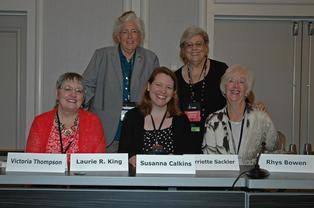 Agatha Nominees for Best Historical 2016 (Laure R. King won!) And writing MORE pieces in which I...
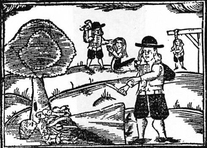 ...discuss how murder ballads inspired my novels... ("A True Account of a Most Monstrous Act, and Other Strange Happenings…" over at Criminal Element)
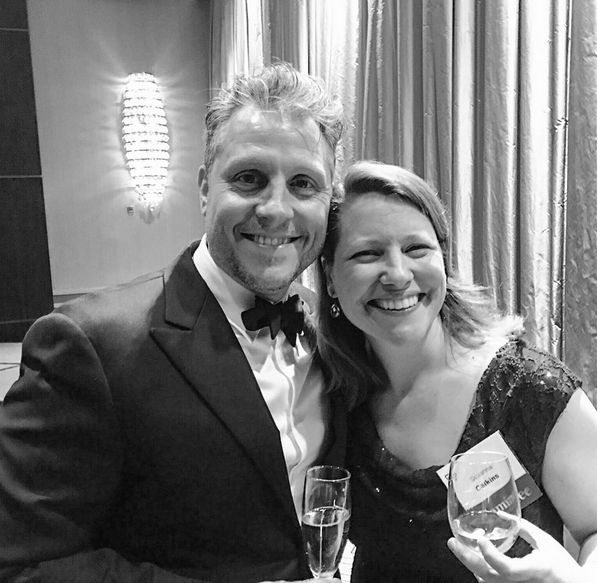
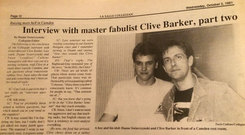 ... and co-interview my college pal Duane Swierczynski (Edgar-nominated author of CANARY) about our time writing for the La Salle Collegian and stalking, er, talking to Clive Barker... [In a pretty rare event for me, I even reviewed Duane's book at Criminal Element!]
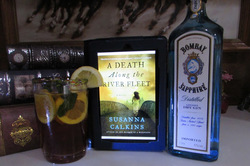
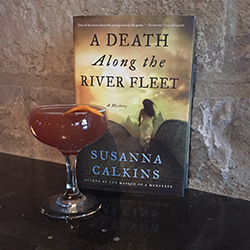 ...And Scottish Whiskey... Check out this cocktail "A Death Along the River Peat" Love it! Recipe included!!! (Thanks Criminal Element!) Completing a few interviews, in which I share:
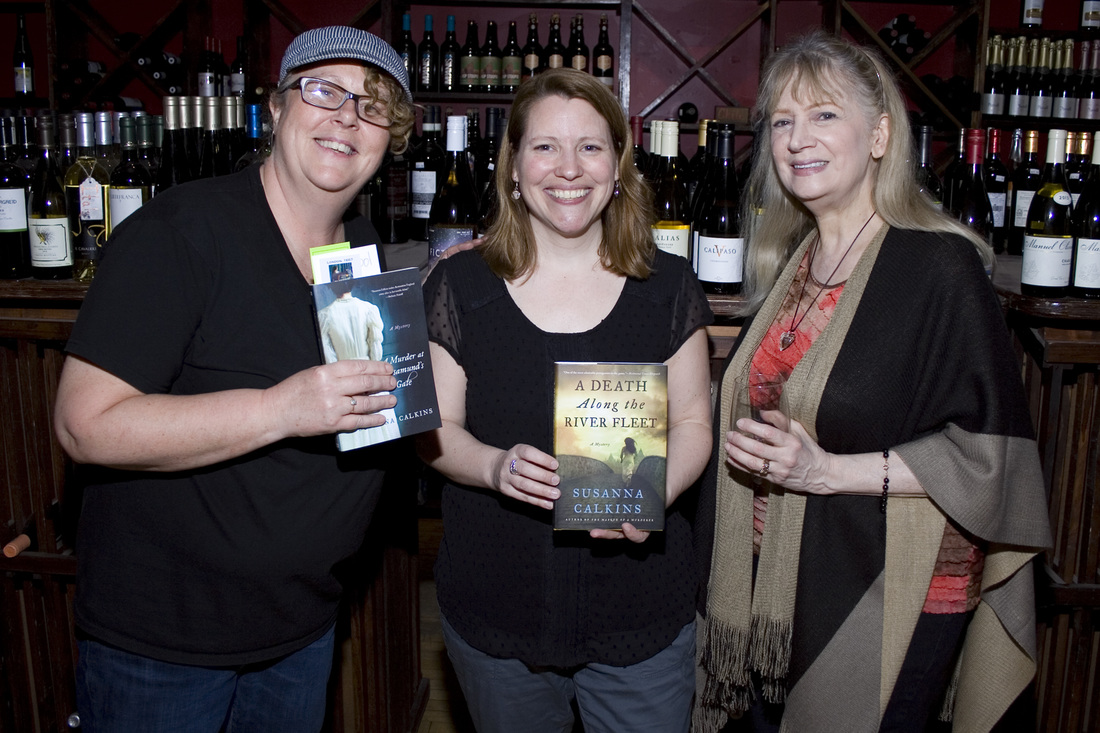
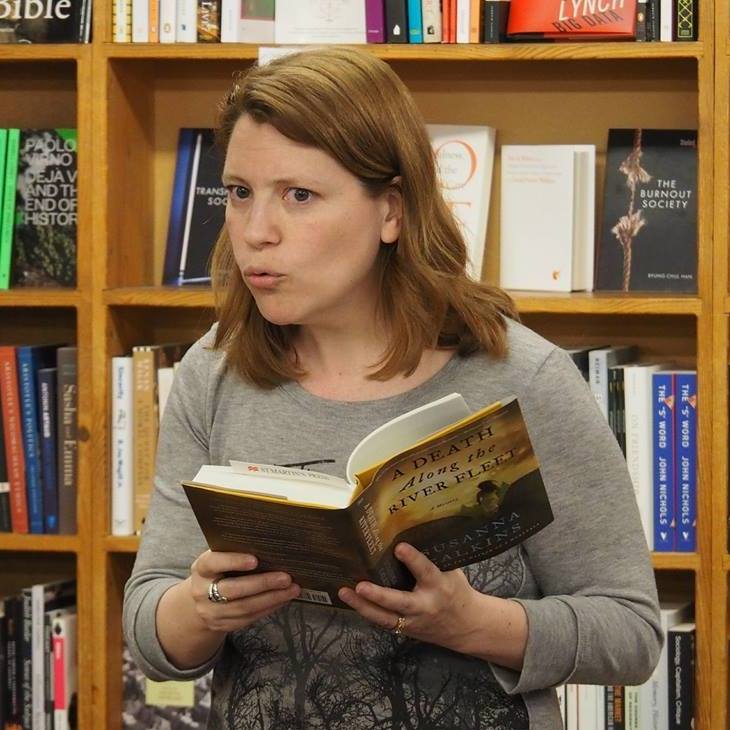
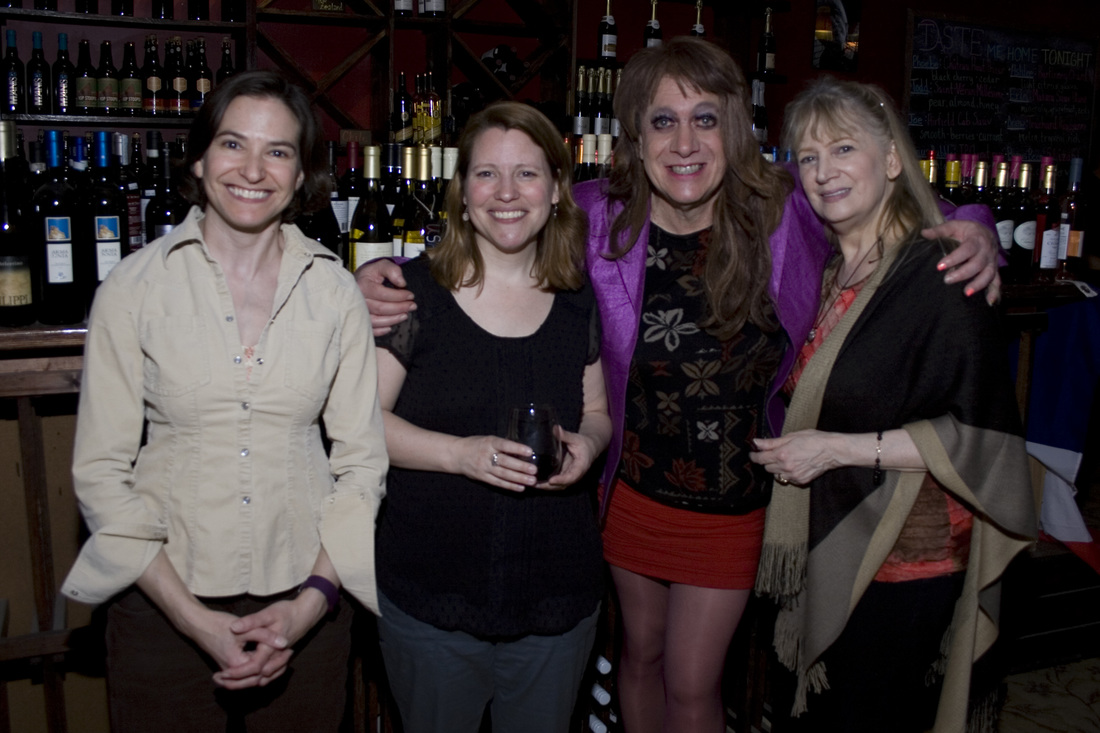
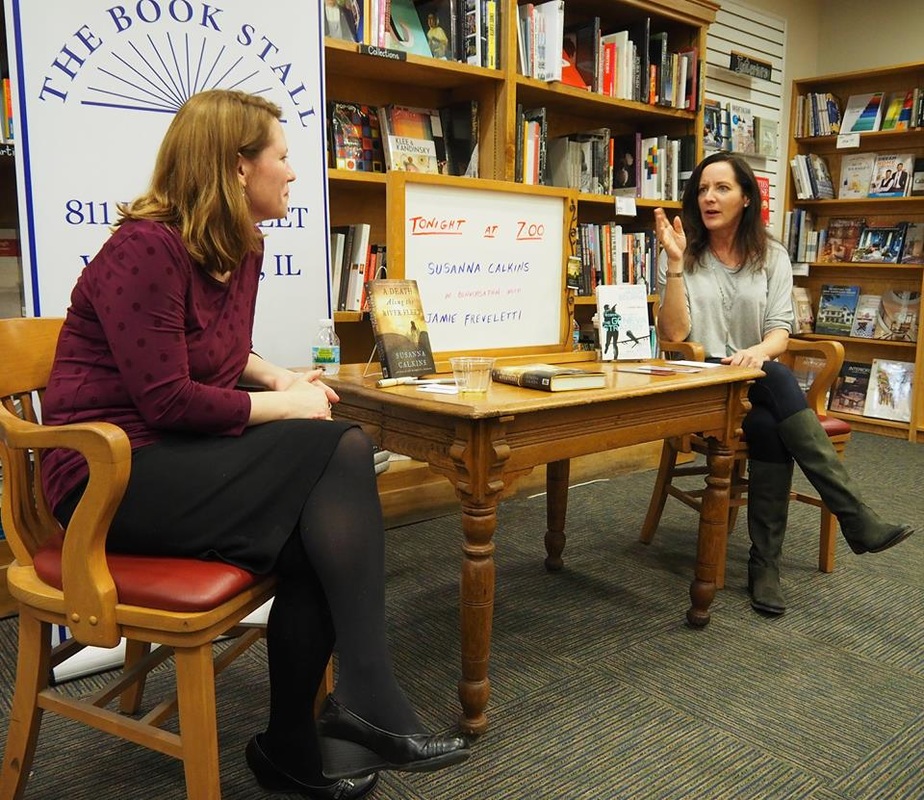
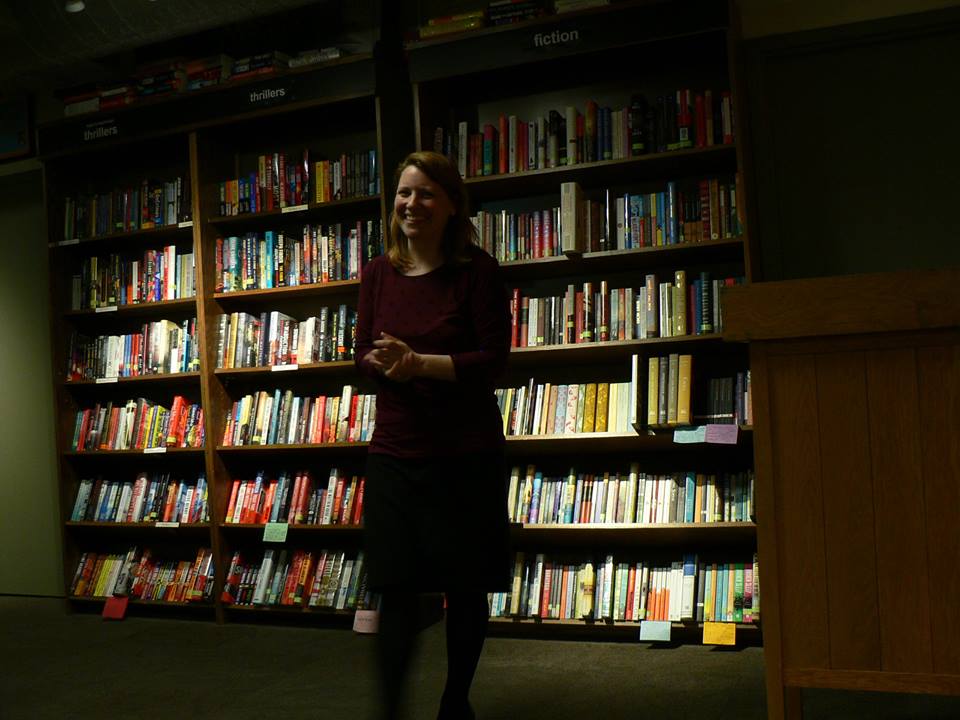
And of course, speaking at a bunch of fun book talks at local book stores and other venues: [Of course, posting these pictures makes me realize that I wear the same outfits to all my book signings!) So clearly, another day I should write about how to balance all this craziness, but putting this post together was probably the most exhausting thing I've done!
And now, back to writing novels!!!
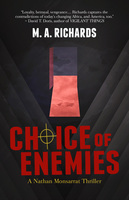
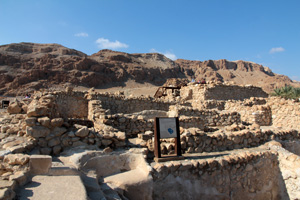 Qumran (Source: Israel National Parks) Qumran (Source: Israel National Parks) Research is such a Siren… Okay, I’ve never lashed my body to a mast and filled my ears with beeswax before firing up the laptop (in the old days, it was easier to build dramatic tension if you were striding up the stairs toward the wooden doors guarding the entrance to your local library, like hometown cousins of Scylla and Charybdis), but I have thrown myself off a cliff into the adventure of discovery – sometimes just for the sake of learning! I’m not talking about looking for relevant statistics for Professor Cudlip’s “Theory of Infinity” course, either. I’m talking about feeling the burn in your frontal lobes, counting your pulse up to 200-plus beats per minute, experiencing the joys of carpopedal spasms. There’s something forbidden, even illicit, about digging into history. You might know where you will start your explorations, but you have no idea where you will end up. Perhaps I’m a voyeur by nature…or an eavesdropper…or just a busybody, but the headlines of 2016 (ISIS, Republicans, North Korea, Wall Street), in my opinion, pale beside the questions lurking in the shadows of history (Did Oswald act alone? Did FDR know the Japanese plans to bomb Pearl Harbor? Did Stalin poison Lenin?) Or perhaps I’m a conspiracy theorist… I know for sure that I am a schizophrenic. I must be…I write under two names. M. A. Richards is the author of a spy novel series featuring Nathan Monsarrat, a former deep cover operative with the CIA – the first novel, CHOICE OF ENEMIES, launched in January 2016 while the second offering, A THOUSAND ENEMIES, will be available in November 2016 (both published by Sunbury Press). I also scribe historical fiction as A. M. ben Yitzhak. Currently, I’m conducting research on the Zealots, the group of breakaway radicals who fled Jerusalem during the Roman rule of the Second Temple Period to live a more pure life in the barren Judean wilderness…and fought the Empire to a standstill from 66 to 132 AD, when the last of the Zealots, led by Shimon bar Kochba, bled to death in the desert south of the Dead Sea. To conduct historical research on a secretive group that lived two thousand years ago demands familiarity with the writings of the period…so, you need (1) access to the original materials (if you ever ask the Israel Museum to borrow the original – not digital - Dead Sea Scrolls for a few days, you’ll hear a really rich laugh) and (2) you need to read Latin, Accadian, Aramaic, and a few other “dead” languages. I suppose you could trust someone else’s translations, but then you are dependent on someone else… There is another roadblock, which might be a blessing, the more I think about it: so few original texts were written two thousand years ago. I can rely on the aforementioned Dead Sea Scrolls, Josephus, and other apocryphal writings (e.g., the minor prophets), but the scholarship of this period is severely limited and, unless you’re on a first name basis with the Witch of Endor, it would be tough to interview Judas of Gamala, Simon bar Giora, Menahem ben Judah or any of the other original kana’im and siqari’im – the founders of the Zealots. A third difficulty refers back to the opening of this epic…research is such a Siren! It’s addictive! Impossible to stop! I can’t tell you how many times I shut down the stacks in local and university libraries. At least, the internet never sleeps, but unless you induct your spouse into the Eleusinian Mysteries, chances are good that the time you spend researching the daily habits of the Zealots will do nothing for your marriage and family life. Faced with so many challenges, what’s a historical novelist to do (and I’m not talking about agents and editors shaking their heads and informing you that the market for Zealot fiction is incredibly, infinitesimally tiny)? Travel! Read the State Department warnings…and ignore them. Listen to your family and friends…and ignore them. Read the newspapers and watch the twenty-four cable stations…and ignore them! You wanna write about the Zealots? Go to their home. Stomp around their ancient stomping grounds. You probably will not discover a missing cache of Dead Sea Scrolls in the unexplored caves of Qumran, but you will absorb the zeitgeist of the period as you stumble over sandstone boulders, tread on red desert poppies, and quaff liter after liter of tepid water beneath the broiling desert sun. You don’t have to go the fully Monty, either…you can sleep not in a tent beneath clear, star filled skies but in an air conditioned hostel that offers hot showers and a fantastic breakfast of yoghurt, cheese, olives, bread, fruit, and vegetables. After a few weeks of following in the footsteps of the Zealots, you will have collected enough ambiance to fill the pages of a historical novel and a wonderful appreciation for the amenities of the twenty-first century. When you’re back home, having made amends with your spouse, family, and employer, when you’re sitting in front of your laptop with English translations of Josephus and the Dead Sea Scrolls piled on your desk, when you launch your fingers against the monolithic blank digital page…you will always have your best ally by your side: your imagination. After all – it’s not history. It’s historical fiction.  M. A. Richards is the author of the Nathan Monsarrat
international espionage novels. Born in Lowell, Massachusetts, he received his Bachelor of Arts degree in Theater Studies from Connecticut College and his Master of Arts degree in English from the University of Massachusetts at Amherst. During a career as a Cultural Attaché in the Department of State that spanned more than two decades, he served in Baghdad, Jerusalem, Lagos, Moscow, Seoul, Tel Aviv, and Washington, D.C. He also served at U.S. Pacific Command in Honolulu as the Special Advisor to the Commander. He speaks Arabic, Hebrew, Korean, and Russian. M. A. divides his time between Palm Beach and Tel Aviv, where he indulges his passions for motorcycles, photography, and archaeology. Visit www.MARichardsBooks.com to learn more about M. A. Richards and CHOICE OF ENEMIES. 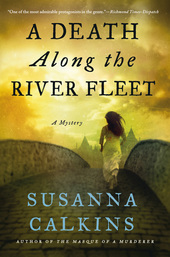 I'm often asked about how I write my books, whether I outline them first or just start writing. But really my books come to me in a series of images and then questions, which I then seek to answer.
For A DEATH ALONG THE RIVER FLEET, the image that came to me is essentially what has been portrayed on the cover. The image was of a disheveled woman, barefoot and clad only in a simple shift, covered in blood that was not her own. In my mind, she had no memory of who she was, or what had happened to her. But that's where the questions started.... First, I needed to think about where Lucy could encounter her that was plausible. I thought maybe on the London Bridge, but the Bridge had been damaged by the Great Fire, and I didn't think Lucy could be walking in that direction. So I thought about other options, and ended up having Lucy encounter the woman on Holborn Bridge, by the rancid River Fleet when out delivering books. Then, I began to think about what Lucy would do when she found the woman--how would she react? Lucy, being Lucy, decides that she can't just leave this poor afflicted woman to the devices of suspicious townspeople, and takes her to a physician she knows. And then that led to more questions. What would a more educated person think about the woman's illness? What kind of healed wounds might the woman have, under closer inspection? How could they learn the woman's identity--what kind of clues could be on her person? And of course lastly--whose blood was on the woman? Those are the types of questions that I would ask myself, to keep my story moving forward.... If you are interested in reading an excerpt, you can see how these questions involved into the story at the heart of A DEATH ALONG THE RIVER FLEET. I've been writing my blog for about four and half years now, as sort of a side project to talk about history, mystery, writing, and of course my books. But it never really occurred to me that the practice of blogging may actually be helping me in my writing. That is, until I read the post by my guest blogger today, playwright and author Nina Mansfield. Her debut novel, SWIMMING ALONE, was released in 2015. Here she talks about what she's learned from blogging, and the impact it has had on her writing and writerly life. 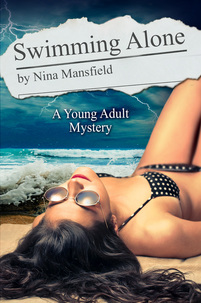 From the official blurb: The Sea Side Strangler is on the loose in Beach Point, where fifteen-year-old Cathy Banks is spending what she thinks will be a wretched summer. Just when she begins to make friends, and even finds a crush to drool over, her new friend Lauren vanishes. When a body surfaces in Beach Point Bay, Cathy is forced to face the question: has the Sea Side Strangler struck again? I know, I know…blogging is writing. But until I took up blogging about a year ago, I really didn’t think it was. Writing novels, plays, short stories, now that was “Writing.” But blogging? I wasn’t so sure what it was exactly. So first off, I would like to admit here, publicly, that I was 100% wrong about blogging. During this past year of constant blogging, I have learned that blogging is absolutely writing. Since I’ve become a blogger myself, I’ve also started to read many more blogs, and I could not have more respect for my fellow bloggers. That said, I really think blogging has helped me with my other writing projects as well. For a while, I thought it might be a distraction- something that would take me away from the “real” work at hand. The truth is, creativity begets creativity. Here’s the thing, sometimes I have thoughts running through my head that don’t belong in a mystery novel or in some quirky ten-minute play (the things I tend to write.) Like this piece I am writing right now. I mean, can you imagine, the detective finds the body, and then devolves into a rant about…why blogging is great? It just wouldn’t work. But a blog about blogging, now that’s a perfect fit. Blogging has forced me to write. My readers (and I am pretty sure I have at least two regular blog followers), expect content. And once I got into the habit of actually getting my thoughts down (about theater, books, and topics related to crime solving, etc., the focus of my blog), well then, it got easier and easier to sit my butt in the chair, and get my blog written. And you know what? The more I get my butt in the chair for this blogging thing, the more I get my butt in the chair for all that other writing as well. Blogging has taught me to meet deadlines. OK, so often these deadlines are totally self-imposed. But they are still deadlines. And I have actually been really tough on myself about keeping them. And when I am writing a guest blog (like this one) there are often real deadlines to meet. I don’t want to let down my host. Blogging has forced me to write quickly. And I don’t mean just because I am pressed for time, and because I tend to give myself unreasonable deadlines. I mean I have really taught myself to get the words on the page and hopefully make them not horrific, pretty much as soon as I’ve come up with a topic. Blogs are often powerful because they are timely. For example, when I attend a writing conference, I want to write about it as soon as the conference is over. Because, guess what? Chances are, no one is going to care in week or two. People move on. I can’t dilly dally. (That novel I’ve been writing for five years…well, that’s another story.) Blogging has taught me to be less precious about my writing. In part, because of the deadlines and the shelf-life of a blog, but also, because I have to move on and get the next thing written. I mean, yeah, I want everything I write to be perfect. But that isn’t always going to happen, and that’s OK. Writing is better written than unwritten (at least most of the time). Blogging has helped me “meet” and learn from a whole bunch of really fabulous other writers. I’ve been welcomed by so many authors onto their blogs, and I’ve also had the opportunity to host 40+ writers on my own blog during the past year. And you know what? Writers are the coolest people. They have awesome stories to share about what inspired them and where they get their ideas. They tell you about the books they’ve written and are writing. And since I love to read and I love to write, well, I’m pretty stoked to have made a whole bunch of new writer-blogger-author buddies, even though most of them are just virtual friends. Occasionally, I get to meet some of these awesome new buddies in person. And that is just the best. You know, Nina, I completely agree~ Thanks for being on my blog!  Nina Mansfield is a Greenwich, Connecticut based writer. Her debut novel, SWIMMING ALONE a YA mystery, was published by Fire & Ice YA in 2015. Her blog, NOT EVEN JOKING, just celebrated its first birthday. Her plays have been published and produced throughout United States and internationally. Her graphic novel FAKE ID: BEYOND RECOGNITION, illustrated by Leyla Akdogan, will be out with Plume Snake in 2016. Nina’s short mystery fiction has appeared in Ellery Queen Mystery Magazine and Mysterical-E. She is a member of Sisters in Crime, Mystery Writers of America, International Thriller Writers, Society of Children’s Book Writers and Illustrators and the Dramatists Guild.
|
Susanna CalkinsHistorian. Mystery writer. Researcher. Teacher. Occasional blogger. Categories
All
Archives
May 2023
|

 RSS Feed