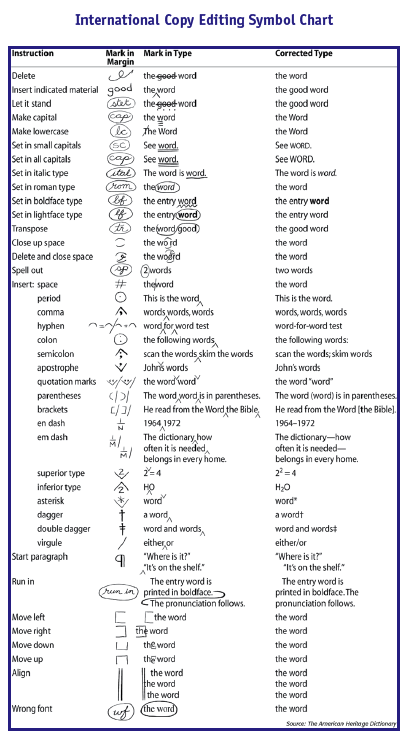
 this MEANS something! After working through the copy edits of my first novel--A Murder at Rosamund's Gate--I must say, I really learned a few things. First, copy editors are amazing. Really. All this chicken scratch to the left actually means something important to the copy editing process. Delete! Insert! Move up! Move down! and my favorite, "AU," which is short for "Author, what the heck could you possibly mean by this passage?" I'm used to marking up student papers, but only the first few pages.So I was shocked--and frankly, a bit chagrined--to see that my entire manuscript was marked up from beginning to end, with characters and symbols I didn't recognize. (Thankfully, copy editors don't seem to share my grading philosophy: "Make 'em fix it themselves!") But I'm deeply grateful for her enormous help, and cognizant of how fortunate I am. Second, apparently, I don't use commas correctly. Nearly all my commas were eliminated in the editing process. This surprised me. Purdue's famous Online Writing Laboratory tells us there are 15 rules concerning the use of commas. Having had to memorize these rules as a grad student, I'd been reasonably confident in my ability to render a comma correctly. Yet, as I've learned, few of these comma rules hold true in fiction writing. Why such a marked difference in style? I suppose in fiction, the goal is to keep readers breathless, which won't happen if they have to stop at every comma speed bump. So my takeaway? Commas be damned!  those verbal tics are insidious! Third, I learned I have some terrible writing tics. Okay, I know the words "But," "However," "Yet," and "Actually" are not as disgusting as the tick pictured here, but they're equally insidious--crawling through my manuscript, clinging to my sentences-- refusing to be combed away under even the closest of scrutiny. Disgusting, I tell you! Disgusting! And so so SO hard to exterminate! See how many I've used in this post alone? But being aware of them is half the battle, right?  I don't edit with scissors anymore! Fourth, and more significantly, I also learned that continuity errors are extremely easy to make in the revising process. I can't remember if I've talked about this already but let me just say: Continuity errors are extremely easy to make in the revising process. (Ha! you see what I did there?) Seriously, I've discovered this problem the hard way. After I chopped out 10,000 words from the beginning and pushed the novel timeline back six months, I made some mistakes. These continuity errors also occurred, I think, when I cut a few minor characters (and reassigned their actions to other characters). Unless a writer is meticulous, which frankly I'm not, it's easy to make mistakes. This leads me to the fifth thing I learned: The spreadsheet is my friend! I'd heard writers talk about their "Bibles" (Nathan Bransford calls his the "Series Bible"), which contain all their character descriptions and quirks, key points, timelines etc. Never mind the term is a complete misnomer, the idea is sound. Systematically keeping track of stuff in a spreadsheet seems to be a particularly good idea now that I'm working on my second novel. This might give my Vice-President for Continuity Management (aka my alpha reader) a reprieve as well. And the sixth, more serious, point: As much as I think I've scrutinized my manuscript for historical inaccuracies, they seeped in anyway. "The Fire of London," my copy editor politely informed me, "began on September 2, which was a Sunday morning, not a Monday morning." No! this couldn't be true! She must not have understood how the Julian calendar worked. Ten days off the Gregorian calendar, beginning on March 26, blah blah blah I've talked about this before. Bottom line: there was no way I had it wrong. Confidently, I opened up my trusty historical date calculator, blithely went to September 2, 1666 and --Egads!-- found that the great calamity of London had indeed begun in the wee hours of a Sunday morning. I know my cheeks were a furious shade of red as I scrambled to reframe one of the most important scenes in my novel. It was hard work I wasn't expecting at this point, but I'm so grateful these errors were caught in the end. 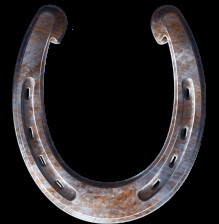 shaping a novel--farrier style Which leads me to my seventh, most important, most nerve-wracking realization. The copy editing process means my novel--ten years in the making--is almost ready for the world!
I'm no longer shaping this malleable object, hammering it, re-firing it, working it just so. It's almost ready! But the big question is...Am I? Murder at Rosamund's Gate
19 Comments
Matt
5/13/2012 01:32:19 pm
Fascinating post! Great insights into the process. 5/16/2012 11:17:46 am
thanks! It was actually pretty fun to do! (oh no! "Actually!" I really can't rid myself of these tics!)
Michelle
5/13/2012 06:55:40 pm
Interesting. I love writing with lots of commas and verbal tics. It's a good thing I am neither a copy editor nor a novelist. And not a single comma was used in this post!
Debbie
5/13/2012 10:13:17 pm
This post is so illuminating, but terribly frightening. Even though I'm relatively competent there is so much I have to learn about writing. [Should there be a comma in that sentence?!?] It is nice to learn that you are not on your own in getting it right before publication. Hat's off to the editorial staff! Congratulations. 5/16/2012 11:22:02 am
Debbie--I think if you look at the whole process it could be pretty daunting, but taken in steps, not so bad. I think the trick is figuring out the writing style for different genres (and quite frankly, I still don't think I have it down in either field).
Jennie
5/17/2012 02:08:48 pm
Susie, 5/18/2012 09:36:06 am
Thanks! I'm pretty excited to see it all shape up and shake out :-) 5/18/2012 06:08:13 am
I agree—copy editors are a breed apart. I consider myself a pretty good editor in general, but there's no way in hell I could do a copy editor's job. 5/18/2012 09:41:01 am
Jeff--that sounds fun. Maybe I should do random walk-bys when my book comes out and have friends take pictures of me with my book. (Maybe that's a bit narcissistic though.) Or maybe I'll just spend my time by putting my book at easy to see eye level in every store I pop into. No one will ever know...! my own personalized marketing campaign. 5/18/2012 12:20:05 pm
Susie—you're now a first-time author. It *is* narcissistic, and this is the one time when it's socially acceptable! :-) For the rest of your life, everyone who has always wanted to write a book will look at you in awe—and those of us who are unpublished *novelists* will do likewise. Enjoy your moment in the sun. 5/18/2012 06:09:57 am
LOL... need some web editing help? I was just sent to this page by email:
Susie
5/18/2012 09:41:50 am
I don't know...do I need help? I thought you got that message if you clicked the box to notify you...? 5/18/2012 12:20:57 pm
Look closely—the web page misspells "receive", which is exceptionally funny on a blog post about copy-editing. 5/19/2012 02:34:04 am
I'm an excellent editor for "Jeff style writing", which means I catch spelling errors (unless it's the dozen words I always screw up). But God help me when I'm told to write AP style—drives me up a frickin' wall.
bekerys
5/22/2012 05:21:48 pm
Funny you should mention the word "actually". I do not think you are alone in this tic; a certain 8 year old girl of our mutual acquaintance actually (!) uses it herself often enough. I believe she gets it from her mom, and to a lesser extent her dad, and I know I use it fairly often. Hmmm... Beckerys--no, I won't. I really think she did an excellent job. Commas, minor word suggestions and the like don't bother me. I learned a lot time ago that its a good idea to accept constructive feedback, and not to view my words as precious. I think she helped me strengthen the book. Leave a Reply. |
Susanna CalkinsHistorian. Mystery writer. Researcher. Teacher. Occasional blogger. Categories
All
Archives
May 2023
|
 RSS Feed